Category Archives: Concerts

City Summer Sounds: 5 minutes with Joanna Bailie


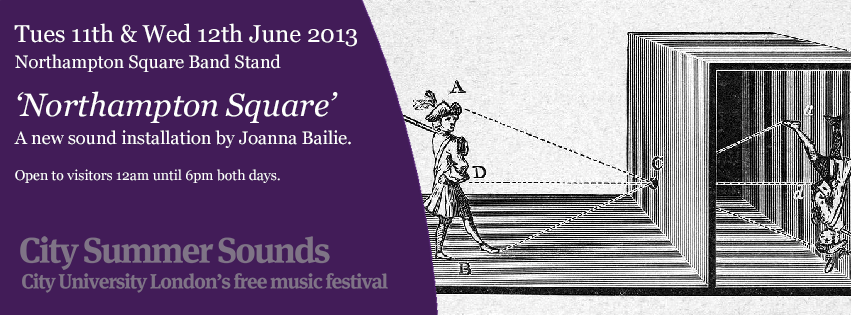
On Tuesday 11th and Wednesday 12th June Joanna Bailie brings her camera obscura inpsired installation to City Summer Sounds festival. We managed to find some time to chat to her about the work as she makes her final preparations:

Your installation ‘Northampton Square’ employs a large camera obscura. For those that don’t know, how does a camera obscura work?

Camera obscura means “dark room” in Latin, but not the kind of dark room in which one develops photographs. In fact it’s a very large version of the inside of a camera — a dark space with a hole cut in one side to let the light (and the image) through, plus a surface onto which to project this image. It works because light travels in straight lines. Of course I only have a projection screen, not a surface covered in chemicals that react to the light, so I cannot preserve any images, they must be experienced live by the audience.

You’ve had a number of works in the past few years focusing on the concept of a camera obscura. What was it that drew you to this medium?

Yes, perhaps I’m a little obsessed. I saw my first camera obscura at an exhibition at the Hayward Gallery on art and illusion about 10 years ago. It was a shed sitting outside the building with a view on Waterloo Bridge. I didn’t know what a camera obscura was at that time, and I was quite taken aback by the image of London in motion, upside down. There was a peculiar quality to the image — I thought it was the most vivid thing I had ever seen. It’s absolutely pure projection of continuous reality, unlike a film with its 24 images per second. A camera obscura has no frames, it’s way beyond HD. It has a level of resolution that HD will never attain. I never get tired of making camera obscuras nor of the effect they have (on me).

Before this installation I made two pieces using a camera obscura, the first with a German scenographer called Christoph Ragg and the second with a string trio. It’s important to say that both these pieces used a theatrical camera obscura, meaning that the bright space that was projected into the dark one, was an interior and thus had to be lit by a lot of theatre spots in order to be bright enough to create a good image. Northampton Square will be lit by the sun of course.

The audience gets a very intimate experience here, getting right inside the camera itself. What do you hope an audience member will gain from ‘Northampton Square’?

First of all I hope, like me, they’ll enjoy the incredibly vivid quality of the image. It’s not intended to be a didactic work at all, but people often end up learning about how a camera works for the first time and they can’t believe that all it takes is a dark and light space with a hole between. It’s a bit counter-intuitive, you might expect the hole to simply let a ray of light into the dark room, which makes what happens that much more amazing. The sound is another thing altogether. It’s a bit more intimate and complex and makes use of a freezing process where the live sound is periodically frozen into a sustained sound. The intention is to make the audience listen to the live sound in a different way, to hear it as a potential music and to experience the contrast between it and the image. The sound is broken up, discrete and abridged while the image, as I’ve already mentioned, is pure continuity.

This installation in particular plays on the boundaries between music and non-music, and unlike the previous camera obscura works relinquishes a certain amount of control to the world outside the camera. Is this balance of music and non-music something that you have focused on before, and what inspired you to focus on this?

The idea of using real life as the basis for some kind of artistic narrative has been the basis of many of my recent works using field recordings. But of course with field recordings you can select what you use from all the sound you’ve captured. In the installation the sound and image are always at the mercy of what happens because they are live. My idea is to try to compose the real life coming into the installation by making a score: a set of (almost) live sound manipulations that the computer has to perform on the microphone feed. The score is quite elaborate and works fairly well regardless of what is going on outside. Occasionally something very special happens at exactly the right time and it’s all just chance (by the way, I recommend coming to see/hear the installation exactly on the hour for reasons that will become obvious!). You could say that the installation is all about creating a frame for reality via the projection screens that physically frame the image, and the computer manipulations that successively frame and unframe the sound.

What’s next for you and the camera obscura project?

Well Northampton Square will be the third incarnation of the installation (the first and second were in Brussels and Belfast). The fourth is set for Brussels again during the Tuned City Festival. That one will look onto a very busy road and will be very different from Northampton Square. Following that I’ll be creating a theatre piece about condensing the last 100 years of history with a German theatre-maker and actress called Katja Dryer, and working on my PhD of course!


You can find out more about Joanna Bailie here: http://joannabailie.com/

The installation ‘Northampton Square’ will be open between the hours of 12am and 6pm in Northampton Square Bandstand on Tuesday 11th and Wednesday 12th June 2013.

For more information about City Summer Sounds head to: http://www.city.ac.uk/city-summer-sounds

Or follow us on facebook: http://facebook.com/CitySummerSounds


Oxford Maqam at City

On 14th May 2013, the Centre for Music Studies was delighted to welcome the group Oxford Maqam, The Madeleine Quartet and members of the King’s College London Big Band to perform the rarely heard operetta Majnoun Laila by Egyptian composer and singer Abd al-Wahhab (1902-91), together with songs from the 1950s and 60s by another prominent singer, Abd al-Halim Hafez (1929-77).

Oxford Maqam is led by Professor Martin Stokes, King’s College London, who also presented a pre-concert talk with band members Tarik Beshir and Yara Salahideen, about the reconstruction of Majnoun Lailla and some of the performance issues raised: ‘The performance is an unusual attempt to restore some elements of the revolutionary soundworld of the early recordings, one that has long since disappeared in Egyptian contemporary performance practice’.

Despite the heavy rain that evening, the musicians performed to a packed Performance Space, bringing in many people from outside City interested in Egyptian music of the early to mid-20th century.

Rachel Hayward directs Gibraltar steel band debut

Gibraltar’s first steel band made its debut in April under the direction of City PhD student Rachel Hayward. Royal Gibraltar Regimental Band Leader, Craig Philbin, aims to nurture community music-making on the Rock. Inspired by the bands he heard in Jamaica, he contacted Rachel to help initiate the project.

Rachel introduced members of the Regimental Band to traditional Trinidadian Carnival songs, ran workshops with local school children, and trained up two youth groups who then performed and won both their classes in the Rock’s Youth Music Festival. The cadets’ pipe and drum corp so wowed the adjudicator with their performance of Toots and the Maytals’ ska classic ‘Monkey Man’ that they were invited to open the gala concert the following week. Craig is now looking to treble the size of the project and fly Rachel back as soon as possible to further the cause of pan on the Rock.

Middle Eastern Ensemble perform at Rostam School, Parliament Hill School, Highgate

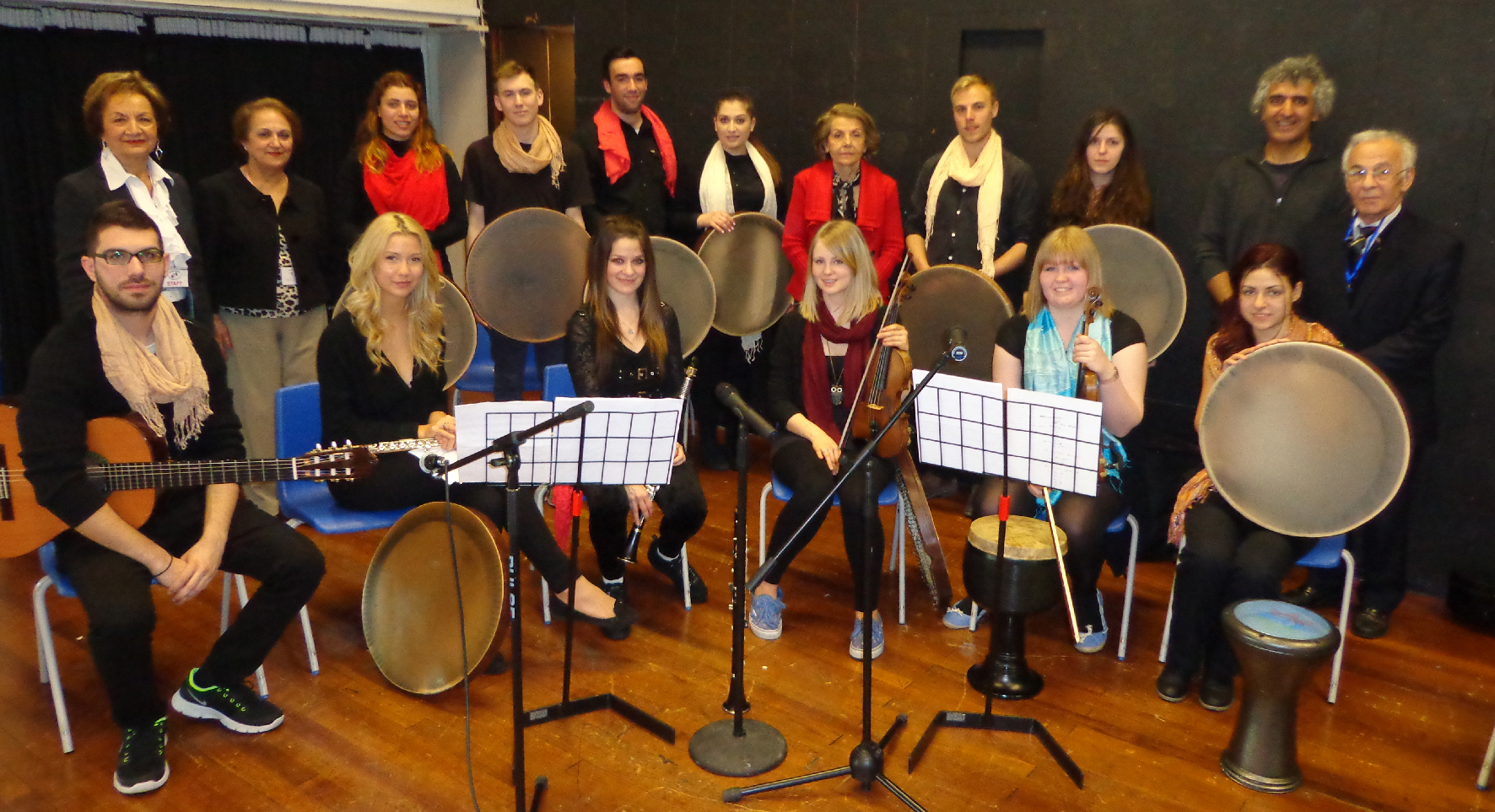
On Saturday 18th May 2013, City’s Middle Eastern Ensemble gave a captivating performance to an audience of students, staff and parents at the prestigious Rostam Saturday Farsi (Persian) School.

The performance included rhythmic as well as instrumental and vocal pieces. The daf frame drums, tombak goblet-shaped drum and darbuka were used in the rhythm section while the melody section was made up of more standard Western instruments: violins, clarinet, guitar and flute.

The vocal piece was based on a poem by the renowned 13-century Iranian poet, Molana (Rumi). The melody based on the ancient 17-beat cycle called “khosh-rang”, meaning “beautiful colours”,  attracted a lot of interest as did the song based on the poem by Molana.

Clare Hammond to perform at the City of London Festival

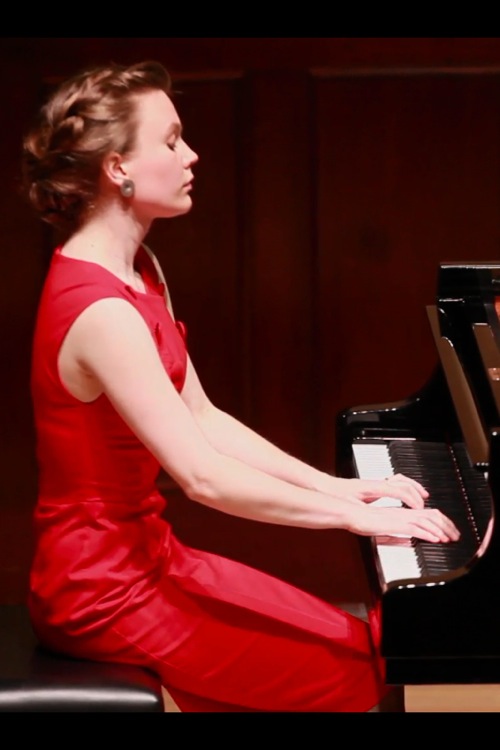
A recent graduate from the Doctorate of Musical Arts, pianist Clare Hammond, is to perform at the City of London Festival in June 2013 as part of their Young Artists’ Series. She will give the world premiere of Hortus Musicae, a cycle of five pieces specially written for her by the composer Robert Saxton. This will be combined with pieces for left hand by Saxton and Bach-Brahms, and little known miniatures by Hamilton Harty and Jean Sibelius. More information available at www.colf.org and www.clarehammond.com.

Ben Schoeman plays Villa-Lobos with the KwaZulu-Natal Philharmonic in South Africa

Ben Schoeman, a DMA student at City University London, performed with one of South Africa’s premier orchestras, the KwaZulu-Natal Philharmonic Orchestra, in a concert on Thursday 14th March. The concert took place in the City Hall of Durban.

Schoeman performed the rarely-performed Bachianas Brasileiras No. 3 for piano and orchestra by Brazilian composer Heitor Villa-Lobos, under the baton of the conductor En Shao. Mr. Schoeman has also been invited to give a series of concerts in South Africa and Namibia during June and July 2013. During one of these concerts he will perform Gershwin’s Rhapsody in Blue with the KZNPO at the Grahamstown National Arts Festival.


For further information please visit: www.benschoeman.com

or http://www.kznpo.co.za/2

City University Music Students Present Major Musical Theatre Concert

Students of City University London presented a major Musical Theatre concert in the Centre for Music Studies’s Performance Space on Tuesday 19 March 2013, to tie in with the ‘Musical Theatre’ module currently running on the BMus programme.

A broad range of solo numbers included ‘The Man I Love’ (Lady Be Good), ‘If I Loved You’ (Carousel), ‘Adelaide’s Lament’ (Guys and Dolls), ‘So Long, Dearie’ (Hello, Dolly!), ‘Wishing You Were Somehow Here Again’ (The Phantom of the Opera), ‘Why, God, Why?’ (Miss Saigon), ‘There’s a Fine, Fine Line’ (Avenue Q), ‘Falling Slowly’ (Once), and ‘Left Behind’ (Spring Awakening).

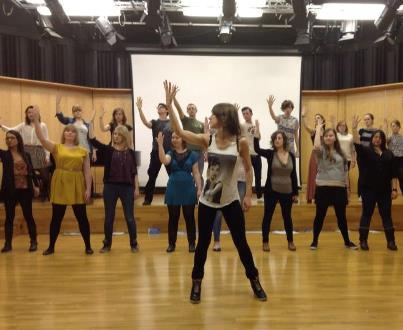
Kiss Me, Kate in rehearsalThe concert also featured choruses of ‘Do You Hear the People Sing?’ and ‘One Day More’ (Les Misérables) from the City University Musical Theatre Chorus, a staged version of ‘What is this Feeling’ (Wicked), and a set by the City University Big Band including ‘They Can’t Take That Away from Me’ (Shall We Dance), ‘Somewhere Over the Rainbow’ (The Wizard of Oz), and ‘Crazy Little Thing Called Love’ (We Will Rock You).

Some 60 performers were involved in the concert, which attracted a sell-out audience. Other highlights included the fully staged chorus ‘Another Op’nin’, Another Show’ (Kiss Me, Kate) to commence the event, and a choreographed ‘Cell Block Tango’ (Chicago) – featuring the City Block Tango Dancers.

For further information, please see: http://www.city.ac.uk/events/2013/march/a-night-at-the-musicals

Update: A promotional video about the concert and its associated academic module, featuring interviews from the students as well as footage of lectures and of the performance itself, was released in June 2013 and may be viewed here: http://www.youtube.com/watch?v=CC01cbDvaw0

Rhythms of the City in Brazil

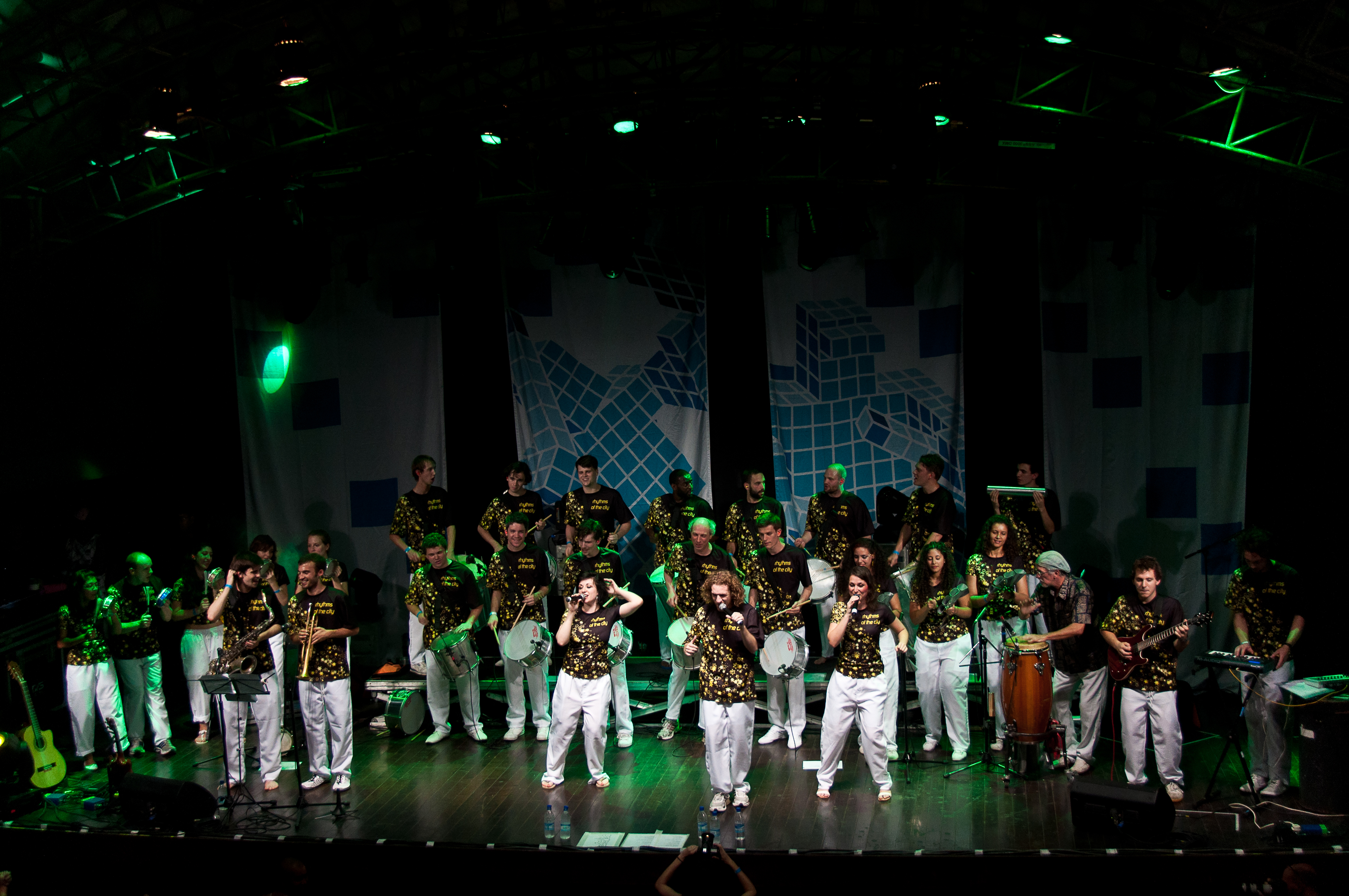
It’s a relatively easy decision to make, to take your students to Brazil, once you are offered gigs in Rio de Janeiro’s top venues. Following a successful Olympic collaboration between Rhythms of the City (City University’s own carnival group) and two of Rio’s most popular street carnival big-hitters: Monobloco and Sargento Pimenta, the return leg was going to be more fun than playing in the rain on top of a routemaster, as we had for the Lord Mayor’s show. No sign of carnival spirit there.

Rio was unsurprisingly altogether different. A 30 strong group of half City teachers, alumni, current undergrads and postgrad, with players from other London institutions making up the numbers, spent one month in workshops, and interaction with every level of musical life in the worlds party capital. It would have been enough to play the 2 shows offered, but by the time word got round, more opportunities came our way to exhibit our skills, playing with traditional samba schools (favela based community carnival organisations), in parties, in the street and on stage. There were also interviews and features in O Globo and elsewhere in the media, our name also being carried forward by blocos (carnival bands) who are playing our arrangements.

The icing on the cake came when, following a masterclass with the city’s most revered samba percussion director (Odlion Costa) and top carnival percussion judge (Sergio Naidin), Odlion invited us to perform for the community at his samba school, Uniao da Ilha do Governador, on the night before our departure. This was an honour beyond our dreams, and we became the first UK group to play at a samba school, hitting it with funky motown covers alongside  local classics. 2nd Year music student, Yazzmin Newell, became an instant celebrity as she leapt from the band to display her amazing samba dance skills at the community’s Saturday night ball.

Hopefully, the 10,000+ who caught our performances over the month will spread the word before we inevitably return.

Can’t make it to Rio? check www.rhythmsofthecity.com for performances closer to home.

— Barak Schmool


Throughout the duration of this trip, 2nd year music student, Rebbecca Neofitou also wrote a trio of blogs for Songlines Magazine, the only world music magazine in the UK, following her internship there before Christmas. The blog became a feature that online readers could follow and keep up to date with Rhythms of the City’s growing success whilst in Rio de Janeiro. These can be found here:

http://www.songlines.co.uk/world-music-news/2012/12/rhythms-of-the-city-in-rio-1/
http://www.songlines.co.uk/world-music-news/2013/01/rhythms-of-the-city-in-rio-2/
http://www.songlines.co.uk/world-music-news/2013/01/rhythms-of-the-city-in-rio-3/


Dionysios Kyropoulos: Recent news

City Music graduate Dionysios Kyropoulos has been awarded the Worshipful Company of Musicians Prize for his outstanding undergraduate final-year Major Project entitled ‘Rhetoric, Affekt and Gesture in Handelian Opera: Towards a holistic approach to historically informed performance’.

After his recent graduation, Dionysios performed the role of Uberto in Pergolesi’s La Serva Padrona in Stuttgart, Germany, followed by the roles of Masetto and Commendatore in Mozart’s Don Giovanni with Thames Philharmonia conducted by Byung-Yun Yu. He created the role of the Whale in Danyal Dhondy’s new opera Just So, premiered at the 2012 Tête-à-Tête Opera Festival, and he also participated in the British Youth Opera production of Smetana’s The Bartered Bride in which he sang in the chorus and understudied the role of Mícha.

Dionysios, who graduated with a first-class BMus(Hons) degree, frequently gives talks about historical stagecraft at the Handel House Museum. This academic year he is back at City University London as the tutor of the City Opera Ensemble, where he offers undergraduate music students theoretical and practical training in operatic performance in his capacity as music and stage director. He is using this opportunity to experiment with period stagecraft and further develop his academic research. Next year he will be studying for the MPhil in Music Studies at the University of Cambridge.

He has continued his association with the Historical Performance Department at Guildhall School of Music and Drama, and recently sung the role of Father Time in The Masque of Time, devised by Andrew Lawrence-King and directed by Victoria Newlyn. A revival of this production is scheduled for 26 March in St Stephen Walbrook. Dionysios is currently preparing to sing in Buxtehude’s Membra Jesu nostri, Handel’s Atalanta with Cambridge Handel Opera and Holst’s Wandering Scholar with Opéra les Fauves.

For Dionysios’s biography, news and upcoming concerts, please visit his website www.kyropoulos.com.