Category Archives: Concerts

Five minutes with: Luci Briginshaw

Luci BriginshawLuci Briginshaw (soprano) and Ian Pace (piano) will be performing tonight in The Performance Space, 7pm, City University London. We spent five minutes having a quick chat with Luci ahead of rehearsals:

Firstly, please tell me a little bit about yourself and what you do?

I graduated from King’s College London, where I did an academic music degree (so not much to do with singing), ten years ago. Since then I’ve been working in an office, and on the side repeatedly trying to get into music college to study singing further. This never really happened, so I’m striking out on my own! I’m very soon going to leave my office job, and be a full-time singer, and this is thanks to my position as an official operatic busker at Covent Garden Market, which, believe or not, does now bring in enough money to live on. I do also occasionally get paid to be in opera productions!

How did you get into music and what made you pursue a career as a musician?

I’ve always wanted to be a musician for as long as I can remember. I badgered my mum to teach me the piano as soon as I was old enough to stand up and bang on the keys. She very kindly financed private piano lessons for me from the age of 5 to 18, and somewhere along that line it became clear to me that singing, and not the piano, was my true love, (although being a pianist is an invaluable aid now I am a singer).

What is it in particular that draws you to opera?

Great music sounds best when sung by a really beautiful voice, in my opinion. Opera has the best tunes, and I want to be the one that sings them!

You’ve recently performed roles such as The Queen (The Magic Flute), Clorinda (La Cenerentola) and Olympia (Les contes d’Hoffmann) as well as Mrs Rogers/Nurse in the new children’s opera My Mother Told Me Not To Stare. What has been your favourite role and why?

I am also about to sing the role of Leila in the Pearl Fishers in April, which I think will be lovely, as well as The Queen of the Night yet again in November. The Queen sings two absolutely phenomenal songs which are great fun, but as a role I couldn’t really say it’s my favourite because in reality you’re very disconnected from the rest of the cast, and spend most of the opera backstage, which is a little dull. As an experience, rather than just as a ‘role’, I would say my favourite job has been the new opera last year, as it was so special to feel I was part of creating something truly new, not just trying to emulate what thousands of sopranos had done before me. And it was also just a really great show!

Yes, creating something new is certainly a different challenge. Is that something you would like to be involved in the future, creating and presenting new operatic works?

I would love to do more contemporary work, yes; it’s very exciting to me. The only downside is it’s incredibly difficult to convince the public to come and see something new; they are very apprehensive, and worried they won’t like it. It’s such a shame that so many wonderful new pieces are being ignored.

Was it a different challenge performing specifically for children?

The challenge of performing to children had largely been taken care of by the composer and librettist, who had created a wonderfully tailor-made children’s story, with accessible music; but a challenge that I, as an actor, had to face was that all of the singing I did was performed with some kind of mask on my face. This meant that all the expression I put into had to be via movement of my body, which did take some getting used to.

It can be difficult to bring together the many hundreds of versions of well-known works when it comes to performance. How do you normally go about approaching well-known works with regards to taking influence from others, yet maintaining your own interpretation and voice?

I tend to learn a piece from the music on the score, and not listen to anyone else performing it until I have already learnt it. Having said that, for extremely well-known works, there is no avoiding the fact that you’ve heard it many times before. I think you just have to colour your interpretation with feelings that accompany the “getting inside” of that particular character – this will always result in an individual performance, because no-one else can be inside your head and therefore sing it exactly as you do.

Finally, what tips do you have for others pursuing a career in music, and more specifically opera?

If it is truly what you want to do, then don’t give up. Don’t bother taking personal offence at any criticism given. And also, although this bit can be tricky, really make sure you have the right teacher. You can waste years going to the same teacher because you like them, or they make you feel comfortable, but you should know in your heart whether or not they are advancing your technique at a noticeable speed. If not, shop around. And don’t give up! Mainly, don’t give up.


Luci will be performing a programme of Rebecca Clarke, Vincenzo Bellini, Richard Strauss, Jules Massenet and Ambroise Thomas, in the Performance Space tonight, at 7pm.

Admission is free; further details can be found at:

http://www.city.ac.uk/events/2013/january/an-evening-of-song,-passion-and-madness


Centre for Music Studies Concert, Tuesday 13th November: Clare Hammond

Clare Hammond, a recent graduate from the Doctorate of Musical Arts programme at City University London, will give a recital in the Performance Space at 7pm on Tuesday 13 November as part of the music department’s evening concert series. Her programme will include works by Handel, Szymanowski, Beethoven and Scriabin.

Acclaimed by The Daily Telegraph as a pianist of “amazing power and panache”, Clare Hammond has performed across Europe, Russia and Canada and has appeared recently at the Wigmore and Barbican Halls in London and the Bridgewater Hall in Manchester. Her Purcell Room debut for the Park Lane Group concert series was praised by The Guardian for its “crisp precision and unflashy intelligence”.

More information is available online at Clare’s website: http://www.clarehammond.com/concerts.html.

Ben Schoeman performs as soloist with the Johannesburg Philharmonic Orchestra

On 31 October and 1 November 2012 City University student Ben Schoeman (DMA) is performing Rachmaninov’s Rhapsody on a theme of Paganini, Op. 43 with the Johannesburg Philharmonic Orchestra under the baton of the American conductor Robert Maxym. The concert form part of the JPO’s fourth annual symphony season. It is one of South Africa’s prominent symphony orchestras. Ben’s performance of Liszt’s Piano Concertos nos. 1 and 2 with the Cape Philharmonic Orchestra was televised several times on South African national television during 2012.

‘Prince Zal and the Simorgh’: Iranian Music Education Project with the London Philharmonic Orchestra

Laudan Nooshin 

Between November 2011 and May 2012, a partnership between the Community and Education Department at the London Philharmonic Orchestra (LPO) and the Centre for Music Studies at City University London introduced Iranian music, culture and story-telling to key stage 2 school children in South London. Jointly funded by the LPO, City University London and the Higher Education Innovation Fund, the project brought together composer David Bruce, storyteller Sally Pomme Clayton, Iranian musicians Arash Moradi and Fariborz Kiani, members of City University’s Middle Eastern Music Ensemble and other City students, and the Bridge Project music education programme. The project was led by myself and Patrick Bailey, head of the Community and Education Department at the LPO.

The project centred around the Iranian epic Shahnameh – ‘Book of Kings’, written by Abolqasem Ferdowsi (940-1020 CE) – and specifically the story of Prince Zal: born albino and abandoned as a baby, Zal is found and raised by the magical and wise Simorgh bird; many years later he is reconciled with his family and returns triumphantly as the new king. With its many topical themes of tolerance and forgiveness, this story proved a wonderfully rich source for use with British school children. The project began in the autumn with workshops in two South London primary schools: Jessop and Ashmole schools. The children were introduced to the melodies and rhythms of Iranian music and to the story of Prince Zal and the Simorgh, as retold in English by storyteller Sally Pomme Clayton. Through the workshops, the children created musical ideas of their own to portray characters such as the Simorgh, or the magical mountain where she lives, ideas which were later used by composer David Bruce for his orchestral piece. Also involved in the workshop were City music students – violinists Rachel Hobby and Beverley Cooper, and Christina Michael and Lucasz Kapraz on Iranian daff (frame drum) – and violin teachers from the Bridge Project, an organisation which provides instrumental teaching in socio-economically disadvantaged areas of South London, and aims to encourage the children, their families and their communities to develop a life-long appreciation for classical music. City composer Alice Jeffreys shadowed composer David Bruce.

Following the Autumn workshops, David Bruce wrote the specially- commissioned piece ‘Prince Zal and the Simorgh’, which was premiered at the Royal Festival Hall on London’s South Bank on 23rd May as part of the LPO’s Bright Sparks schools concerts series. Sally Pomme Clayton narrated the story, accompanied by the London Philharmonic Orchestra, conducted by David Angus; Arash Moradi on setār and Kurdish tanbur and Fariborz Kiani on percussion; members of the City University Middle Eastern Music Ensemble on daff frame drums –  Andrew Allen, Timothy Doyle, Christos Seas, Emma Langley and Jonathon Porter; and fifty key stage 1 violinists from Jessop and Ashmole Schools with their Bridge Project teachers. Each of the two concerts was attended by 2,500 key stage 2 children and their teachers. The central theme of the concert was telling stories through music, and as well as David Bruce’s piece the children were treated to extracts from Peter and the Wolf by Prokofiev, Swan Lake by Tchaikovsky and a very lively and enjoyable sing-along ‘I Wanna be Like You’ from The Jungle Book film, music by Richard and Robert Sherman. For many of the children, this was their first experience of a live orchestral concert and there was an air of great excitement. Presenter Andrew Barclay did a wonderful job of introducing the music, including elements of audience participation between pieces.

In the lead up to the concerts in the spring, I wrote a teacher’s pack for use in the classroom introducing pupils to Iran – the country, and its traditions of music, story telling, poetry and visual arts. The pack also included ideas and suggestions for practical classroom activities in preparation for the forthcoming concerts. Some of the teachers also participated in preparatory workshops run by the LPO Education and Community Department and led by myself and Patrick Bailey.

Several teachers gave very positive feedback on the concerts and other activities associated with the project. One of them explained, ‘In the week before the concert we used the story in our literacy lessons, describing the Simorgh, using drama and role play to investigate character and writing diary entries for Prince Zal from the different stages of the story. The children were really engaged with the story and with the drama and produced some really good writing. It exposed children to a new culture. Their listening skills were developed by using Prince Zal’s [musical] theme to understand how a character changes over the course of a story. And the concert also inspired the children in their own music-making … we also used the drumming rhythmic patterns (groups of 2 and 3 notes) from the resources pack in a mathematics lesson, working out which numbers could or could not be made by adding strings of 2s and 3s’. In another school, children painted their own pictures of the Simorgh, taking inspiration from the beautifully detailed miniature paintings of the Shahnameh stories found in old manuscripts, an example of which was included in the teacher’s pack

All in all, this was a very worthwhile and valuable project. We hope that there will be opportunities to extend this project in the future, both through school workshops and further performances of the piece, in the UK and abroad. There is also discussion about a possible children’s picture book with the accompanying music. In the current international climate, it’s hard to overstate the importance of projects like this which aim to promote greater cultural tolerance and understanding, and in particular a more positive image and understanding of Iran – its people, culture and history – than pupils might normally experience through the media and other kinds of representation. And what better way to do it than through music!


For further information on the project, see the links below:

http://www.lpo.org.uk/education/schools_brightsparks.html

http://www.lpo.org.uk/education/

Sally Pomme Clayton’s blog:

http://sallypommeclayton.com/blog/?p=777

David Bruce’s website:

http://www.davidbruce.net/works/prince-zal-simorgh.asp

The Bridge Project

http://www.londonmusicmasters.org/about/bridge-project/


‘Prince Zal and the Simorgh’ workshop, Autumn 2011. Young violinists at Ashmole School, Lambeth, with City University music student Beverley Cooper in the background.

Premiere of ‘Prince Zal and the Simorgh’ by David Bruce, LPO Bright Sparks Schools Concert, Royal Festival Hall, 23rd May 2012.


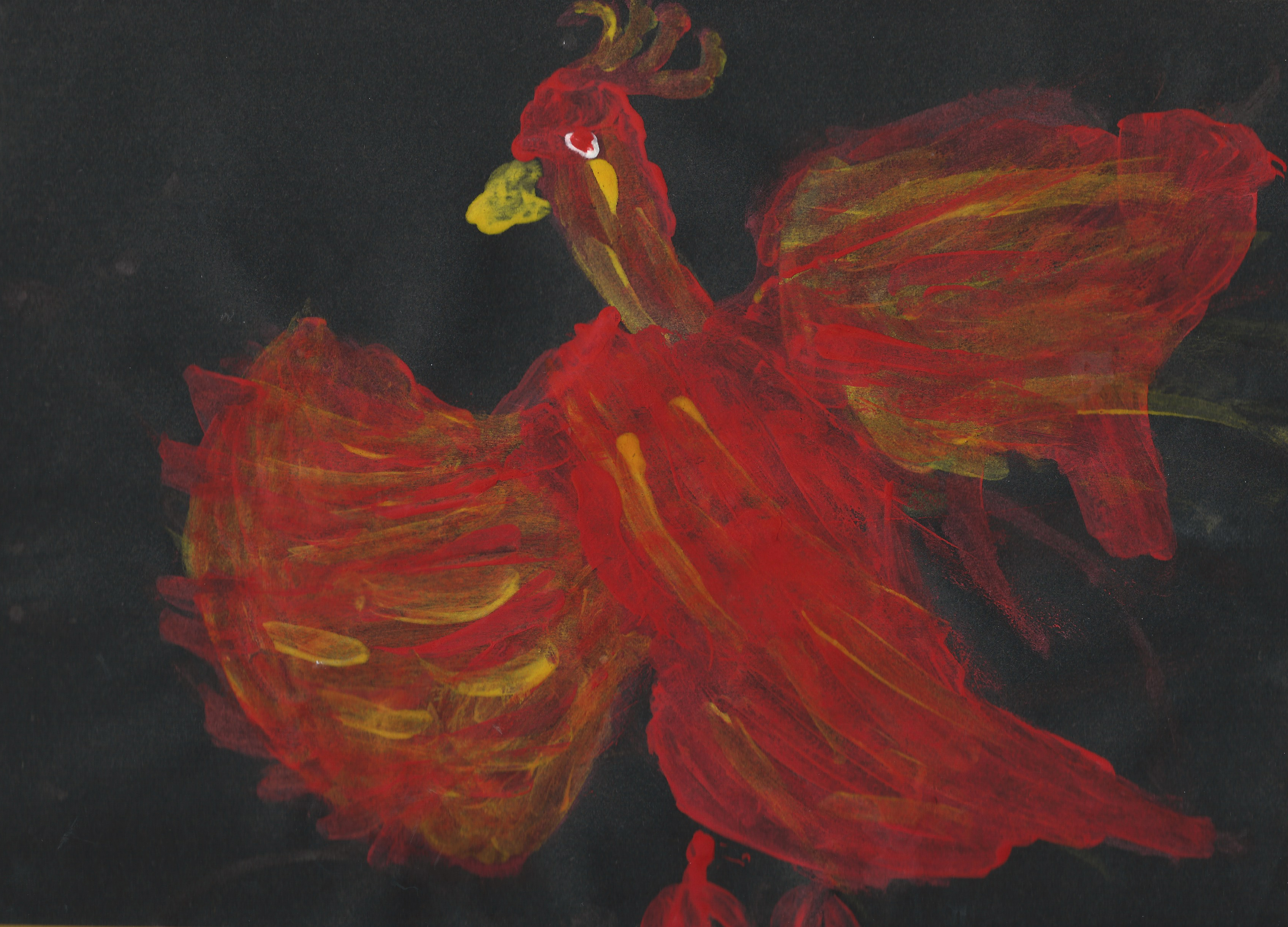
Picture of the Simorgh by Oscar Murphy of Lee Manor School, South London.


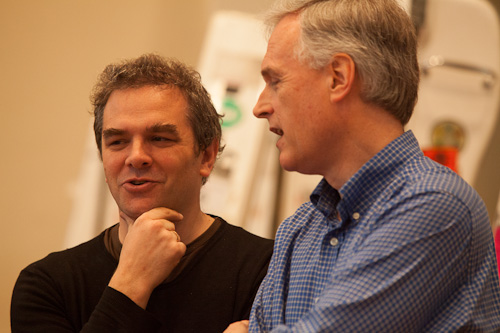
Composer David Bruce and conductor David Angus in rehearsal. Photo: Neil Matthews.


PAKAW! at City University

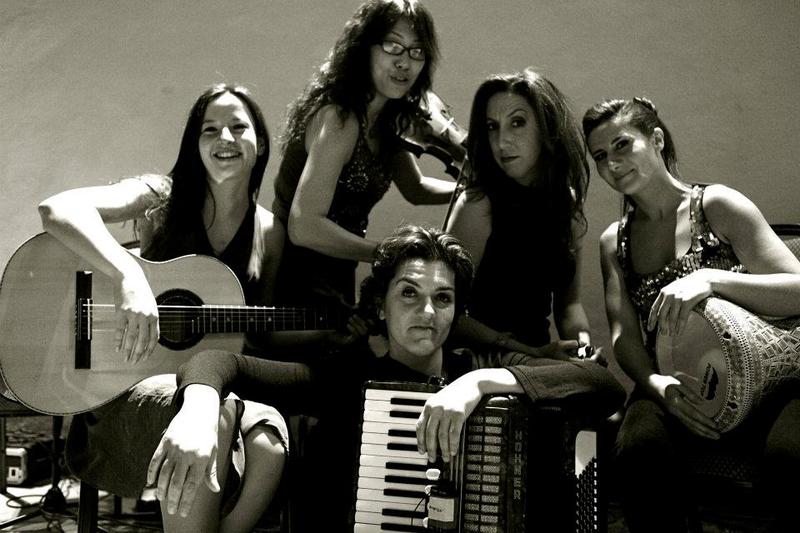
On Tuesday 9th October PAKAW!, the all-female combo that pushes the boundaries of the traditional, visits City University London’s Performance Space.

Katerina, Muzmee, Paressa, Olympia and Duygu met in the lively Rebetiko music scene in London. The diversity of their musical backgrounds – from Classical to Latin American, from Byzantine Chant to Ska, from Turkish rhythms to Russian Polyphony – means they have an intoxicating range of colours and flavours to draw upon. What unites them in spirit is their love for Greek music and all the traditions and historical worlds it touches, from the Balkans to the Greek Islands, from the Black Sea to the mountains of Epirus.

As the only all female band with a Greek repertoire, PAKAW! turn heads before they play a note. PAKAW!’s performances radiate a unique energy, always capturing their vibrant audience, be it in London or the beautiful island of Mytilene. They have played in venues across London, including the National Theatre, and have toured to Istanbul and Athens.

The concert is at 7pm in the Performance Space (ALG10), College Building, Northampton Square.
Admission is free, places can be booked via: http://www.city.ac.uk/events/2012/october/pakaw!

Find out more about our concert series at:
www.city.ac.uk/concerts
www.facebook.com/CityUniConcerts
www.twitter.com/CityUniConcerts

Hall Street Quartet perform at City

With the arrival of the new academic year comes a new concert series at City University London and who better to kick it all off than our very own Hall Street Quartet?

The band will be performing a programme of both jazz standards and more contemporary reperoire at
7pm on Tuesday October 2 in the Performance Space, College Building, City University London, EC1V 4PB. Admission is free, no booking required.

Formed in 2010 at City University, the Hall Street Quartet is an exciting young jazz outfit consisting of Matt Racine (Tenor Saxophone), Tim Doyle (Drum kit), Matt Billington (Bass Guitar) and Rob Sherwood (Guitar). Originally intended as simply an avenue to hone jazz performance skills, the band has become a performing group in its own right, playing at the inaugural opening of the refurbished bandstand in Northampton Square, as well as at Cottons Caribbean Restaurant, Islington.

For more information and for future concerts visit: http://www.city.ac.uk/concerts


New Cappella Romana CD ‘Live in Greece’ features City Musicians

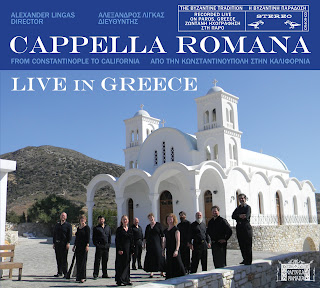
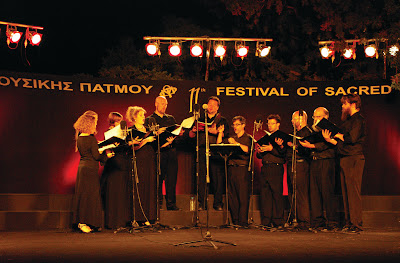
Live in Greece: From Constantinople to California is the latest CD released by Cappella Romana, the American-based vocal ensemble founded and directed  by City University London Senior Lecturer Alexander Lingas. It was recorded on the Greek island of Paros in September 2011 by 11 singers including Spyridon Antonopoulos, a Ph.D. student at City currently writing a thesis on the 15th-century Byzantine cantor, composer and theorist Manuel Chrysaphes.

Dr Lingas chose the music featured on this disc in response to an invitation for Cappella Romana to open the 11th International Festival of Sacred Music on Patmos. Offering the musical fruits of six centuries of cultural encounters between Greek East and Latin West, it begins works arising from meetings of Byzantines with Crusaders and Venetians. East meets West again at St. Sophia Cathedral in 20th-century Los Angeles, where Frank Desby founded a tradition of Greek-American choral music with his Californian colleagues. The programme comes full circle with the mystical ecstasy of Radiant Cloud, a sonic icon of the Transfiguration by Athenian composer Michael Adamis.

The festival concert, which was covered by national Greek television, was held outside the cave where tradition holds that St John the Divine wrote the Book of Revelation.

The ensemble then travelled to the island of Paros, where it performed twice: at a medieval basilica and then in the village of Aspro Chorio, where the programme was recorded by Grammy-winning producer Steve Barnett of Minneapolis and engineer Bill Levey of Seattle.

For additional information and a sound sample, click on this link to Cappella Romana’s blog.

Latest News: A plug from the Eugene (Oregon) Weekly.

Plus-Minus Ensemble performs new works by City MA and BMus students

City University’s ensemble-in-residence, Plus-Minus, returned to the Performance Space in June to present new works by current MA and BMus students. The concert was the culmination of a series of workshops and recording sessions over the past year.

Plus-Minus will return for a new series of workshops, concerts and recording sessions during the 2012-13 academic year.

While in Russia: City University Symphony Orchestra at LSO St Luke’s

City University Symphony Orchestra returned to LSO St Luke’s in May to round off another successful year.

Anthony Weeden conducted a Russian themed evening which began with Mikhail Glinka’s Kamarinskaya before Tatjana Goldberg joined the orchestra for a performance of Wieniawski’s Violin Concerto No. 2. The concert was brought to a triumphant close with Kalinnikov’s Symphony No. 1.

The orchestra is open to all students studying at City University London. Auditions for the coming year will be announced at the beginning of the Autumn term.