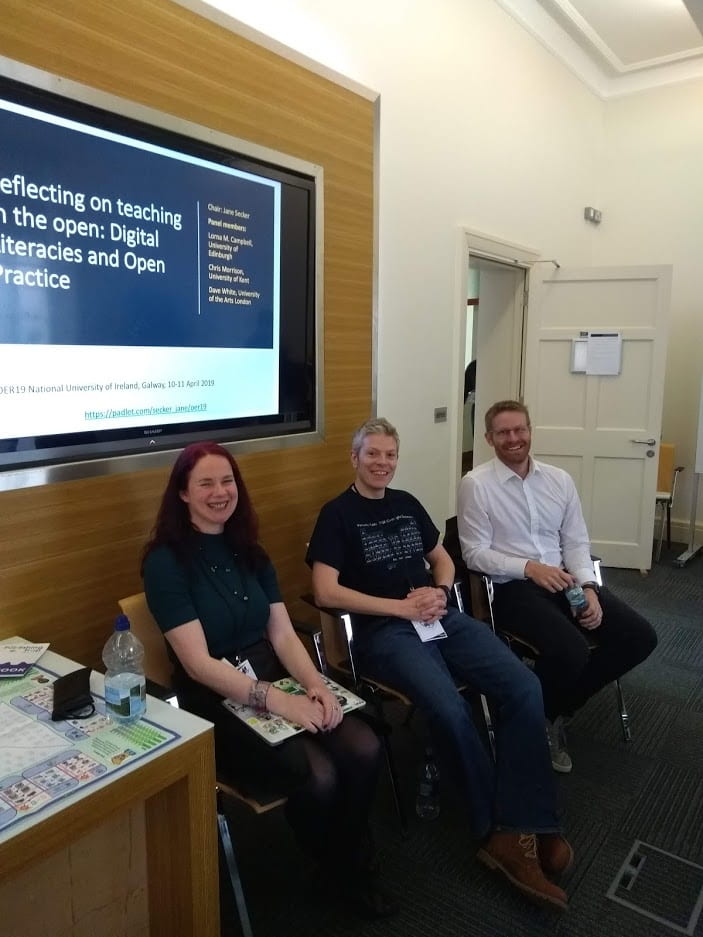
Lorna Campbell, Chris Morrison and Dave White presenting with me at OER19, Galway.
I’m really grateful to our first two webinar presenters, firstly Chris Morrison for giving our first webinar as part of the module last week on Copyright, Digital Literacy and Creativity. We also had a fascinating overview of the open education practices and policy at the University of Edinburgh from Lorna Campbell this morning. I’ve just made the slides and recordings available from both sessions. Here is Chris’s slides and recording and Lorna’s slides and recording.
There were quite a lot of really complimentary themes in the two webinars so they are well worth watching as a pair. Teaching people about copyright, licensing and Creative Commons is an important part of the open education approach adopted at the University of Edinburgh. Meanwhile, Chris is in a different role, but the University of Kent are in the process of creating a Copyright Literacy Strategy which will be used to guide both staff and students. Sometimes people need nudges towards particular behaviours and so this was an interesting theme in both presentations.
We had a fascinating conversation at the end of Lorna’s webinar about how effective the open education policy has been and what might indicate impact or success – their policy was created 5 years ago now. She talked about an increasing number of staff who are creating blogs, and also around a dozen examples of courses using Wikipedia editing as part of a summative assessment for students. Using Wikipedia is often not encouraged, particularly in schools and having a Wikipedian in resident has really started to shift attitudes at Edinburgh.
Chris was able to share some recent research he did into academic perceptions of copyright and also his masters research into how universities are interpreting the exception known as ‘illustration for instruction’ since the review of UK copyright law in 2014. Inevitably Brexit came up, as well as developments in Europe including the controversial Digital Single Market directive. Thank you to both my presenters, who also joined me earlier in the year at the OER19 conference (along with Dave White) to share their experiences of being part of this module.

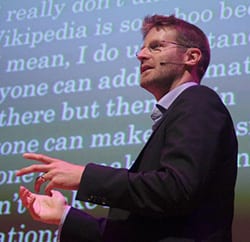 Just a reminder we have another webinar tomorrow at 2-3pm with Dave White, who created the ‘visitor and resident’ typology. He’s going to be speaking about Networked values in hierarchical contexts. Last year’s webinar was a lot of fun and really interactive so please try and make the time to attend live – the session is open to all and as ever the session will be in Adobe connect.