About Jane Secker

Associate Professor in Educational Development at City, University of London

Welcome to Digital Literacies and Open Practice 2024-5

I can’t believe we are about to start this module again for the sixth time as the module was first created in 2018. How time flies! We have a new cohort of students, and I’ve just completed some research on the impact of teaching on this module. The findings about what staff think of their own and their students’ digital literacies are really interesting and going to be the subject of a LEaD Learning Circle event in November. We also collected data on their attitudes towards open educational practices. Watch this space as I have also just submitted the first of a few planned journal articles on this research.

Definitions and terminology are both topics for discussion in next week’s first teaching day. I am really looking forward to meeting the new cohort, as this continues to be a really fascinating area to teach (and do research) in. We’ve got some introductory reading on what are digital literacies (from AdvanceHE) and a similar short piece on what open educational practices are from University of Edinburgh. A key part of the day is also going to be learning about where understanding copyright fits in this whole process and we have a link to last year’s guest lecture from Chris Morrison as he sadly can’t join us next week. But, it’s going to be a great term and good luck to everyone taking the module!

Heading to the European Conference on Information Literacy

Sign saying come in we are open

Photo by Richard Balog on Unsplash

Next week I will be in Krakow, Poland for the European Conference on Information Literacy and I am really excited to be speaking about the impact that this module has on staff attitudes and their academic practices. My session takes place on Monday afternoon and is part of a series of papers about Information Literacy Education. The module primarily focuses on digital literacy and open educational practices, but in my view these are both very much part of information literacy teaching and I am really looking forward to sharing my experiences with the conference delegates. I’ve not been to ECIL for a few years but it’s a fantastic supportive community of educators.

I’m really looking forward to sharing my experience of teaching this module over the past 6 years and also reporting on some of the research I have been undertaking over the summer with my colleague Dr Luis Pereira. We’ve been investigating staff attitudes to both digital literacy and open practices and particularly have been focusing on the impact that the pandemic has had on staff. I’ll be sharing my slides soon, but this builds on research I undertook in 2019 and presented at the Inted 2020 conference in Valencia. This was written up for the conference proceedings and is available on open access.

I’m also looking forward to the module starting again on 20th October 2023, when I have a new cohort joining the course including students from the Masters in Academic Practice at City and Library and Information Science students. I’m so grateful to all the fantastic guest speakers that join me each year and a list of these is available from the webinar page. I wish you all the best for the new academic year!

Sharing my student assignments openly!

Copyright literacy cakes

This year for the first time I modified the assessment for the module EDM122 to require students to publish their final assignment openly on a blog. Over the next few days I will release most of these assignments in a series of blog posts from the 2022/23 cohort. It was also a requirement to add an open licence to the work and to explain why they’d chosen the licence they did. This change has really helped students engage more fully with developing their digital literacies but also thinking about how open licensing works.

I’m so delighted that they agreed to do this and I really hope you enjoy reading about different aspects of digital literacy and open practice and how it relates to their practice.

I also hope to be starting some further research into staff attitudes towards digital literacy and open practice over the coming months.

Digital Literacies and Open Practice webinars 2022/23

Photo of Jane Secker, woman with blond hair wearing a black jacket

Dr Jane Secker, Module Tutor, EDM122

I can’t believe the term is going so quickly and EDM122 is now half way through! This post is a little later than planned as I recently took over as Programme Director for City’s Masters in Academic Practice, as well as the module lead for EDM122 Digital Literacies and Open Practice. I am teaching this course again with my colleague, Dr Julie Voce who is Head of Digital Education at City.

There have been some changes to the module, including an additional teaching day has been adding. The four teaching days are supplemented by webinars which includes an amazing line up of guest speakers who are all experts in their field. This year the webinars mainly take place during the teaching days and so guests are welcome to watch the recordings, but can’t join these sessions live. A couple of the sessions have also been pre-recorded. Our experience in previous years was a relatively small number of people wanted to join live, however please drop us a line if you have any questions or are very keen to join a session.

The schedule for webinars for 2022/2023 is as follows:

  • 12th October 2022 – Chris Morrison, Copyright and Licensing Specialist, Bodleian Libraries, University of Oxford, Digital literacy, copyright and open practices.
  • 2nd November 2022 – Jenny Scoles, Academic Developer (Learning & Teaching Enhancement), Institute for Academic Development, The University of Edinburgh. Blogging as Academic Practice.
  • 2nd November 2022 – Lauren Regan, Digital capability and City students & Geraldine Foley, Digital Capability and City staff.
  • 23rd November 2022 – Lorna Campbell, University of Edinburgh and Catherine Cronin, Open Education Practices.
  • December 20223 – Claire Wotherspoon and Catriona. Embedding Digital literacy in the curriculum.

So far we have got four recordings available and I will be adding the recordings and slides to the webinar page in due course and keeping this up to date. It’s hard to believe, but this is the fifth year of running the module and we have the largest cohort yet taking the course in 2022/23.

Welcome to EDM122 2022/23

Come in we are open sign

Photo by Leyre Labarga on Unsplash

Welcome to the new academic year and the fifth time I’ve run this module (yes it’s hard to believe I know but I started this module in October 2018 when the world was a different place). I’ve also made some changes to the module this year to reflect a few issues that have arisen from previous cohorts. The assignments have been slightly modified. Students now have to tackle both topic (digital literacies and open practice) in their 2 assignments. So if they choose to make a video about digital literacy then they need to write their essay on open practices. Or visa versa. I’ve also integrated the webinars far more into the teaching days. And there are now 4 teaching days including 3 online and one on campus. Finally the second assignment, the essay, now needs to be published with an appropriate open licence on it. So you may well start to see these appearing on this blog, or on another platform chosen by the students.

As ever I am delighted to have guests joining us for the webinars. If you would like to attend one of these sessions then please do drop me a line. Further details of the speakers are below but all the sessions are going to be recorded:

  • Wednesday 12th October 2022: Chris Morrison, Bodleian Libraries, University of Oxford, Digital literacy, copyright and open practices.
  • Pre-recorded video: Lauren Regan, Geraldine Foley and Elisabetta LandoLEaD, Insights into City staff and student digital experiences. 
  • Wednesday 2nd November 2022: Jenny Scoles, Academic Developer (Learning & Teaching Enhancement), Institute for Academic Development, The University of Edinburgh. Blogging as Academic Practice. 
  • Wednesday 23rd November 2022: Lorna Campbell, University of Edinburgh and Catherine Cronin, National Forum for the Enhancement of Teaching and Learning in Higher Education in Ireland, Open Education Practices.
  • Tuesday 2nd December 2022: Claire Wotherspoon, Catriona and Jen, Open University, Embedding Digital literacy in the curriculum.

Happy new term!

Welcome to EDM122: Digital Literacies and Open Practice 2021/2022

Jane at INTED in ValenciaI’m really delighted to be running this 15 credit module  as part of the Masters in Academic Practice for the fourth year running, so welcome to my new cohort at City University. This year I am delighted to be joined by a new member of the academic team at City, Dr Julie Voce, who is also Head of Digital Education. For those who are not at City, but who would like a taste of the module you are very welcome to join the webinar series. I have also made information available about the teaching days and the reading list from the blog.
Digital Literacies and Open Practice is an opportunity for staff and LIS students to explore two important and inter-related issues, that are central to the role that technology plays in education. It has been particularly interesting to discuss these issues in light of the COVID-19 pandemic and the shift to online learning. The importance of considering your own, but also your students’ digital literacies has been only too apparent over the past 18 months. I have regularly had discussions with staff who made assumptions about what students might already know, about how to use technology and how to behave online. I think the need to embed digital literacies into the curriculum are now more important than ever before.

And the crisis has also highlighted the value of open practice, whether it’s about sharing teaching resources, helping students get access to digitised or electronic key readings, and the need for open access research. Last year I signed the Open COVID pledge, to try and be open in the work I write and publish.  I’ve also been running regular webinars for the education community on copyright and online learning, with my research partner, Chris Morrison. Chris will once again be delivering the first webinar in the series associate with this module.

I hope you can join some of this module and if you would like to understand a bit more about the rationale behind it and the feedback from the first cohorts, then I have published the paper I presented just a few weeks before lockdown at the INTED Conference in Valencia in March 2020.  I am looking forward to this module starting again and to sharing my passion for digital literacies and open practice with anyone interested, wherever they might be in the world.

The Impact of Teaching Digital Literacies and Open Practices

Next week I am delighted to be presenting at the OER21xDomains conference, which is being held online on 21-22 April. I have had a paper accepted based on my experiences of running this module for the past 3 years. I will be bringing three former students (Kanan Barot, Ahmed El-Shareif and Hasan Munir) from the most recent cohort to the conference to share some of their experiences. I will also be talking briefly about the research I did in 2019 on staff motivations towards open practice. My session is on Thursday 22md April at 10am.

There isn’t much time in the session, so I am sharing additional content and resources via this blog post for those who are interested in the session. I’ll also share my slides and a recording (if possible) after the event.

Some of the experiences from teaching this module were written up and presented at the Inted 2020 conference in Valenica and so I recommend starting out by reading my paper from the conference entitled Understanding the Role of Technology in Academic Practice through the Lens of Openness. Here I presented some of the findings from the study I did interviewing academic staff about digital literacies, open practice and their experiences of being supported in these areas.

You may also want to refer to the conference session I ran at OER19 in Galway, Reflecting on Teaching in the Open where I was joined by three of my webinar presenters: Chris Morrison, Lorna Campbell and Dave White. Here my webinar presenters reflected on the value of being part of this module and what it meant to their own practice.

Finally, I have been given permission to share some of the video assignments from my past students, who created videos about aspects of digital literacy or open practice as part of the module. These were highly individual and reflect interests that they developed during their time studying the module. Some of the research suggests that existing pedagogic practices are amplified through learning about openness. My research suggests there is a very close relationship between digital literacies and open practices but there is a huge variation in experience. Peers are also tremendously important in supporting staff and helping them develop their confidence to be more open. The pandemic has undoubtedly had an impact on staff attitudes in both these areas and I think we are really at the start of seeing whether an ideological shift towards greater openness and the willingness to share, ends up being one of the lasting changes.

I hope to see you at OER21, I am looking forward to presenting there next week.

Embedding Digital Literacies in the Curriculum with Katharine Reedy and Hossam Kassem


Hossam Kassem

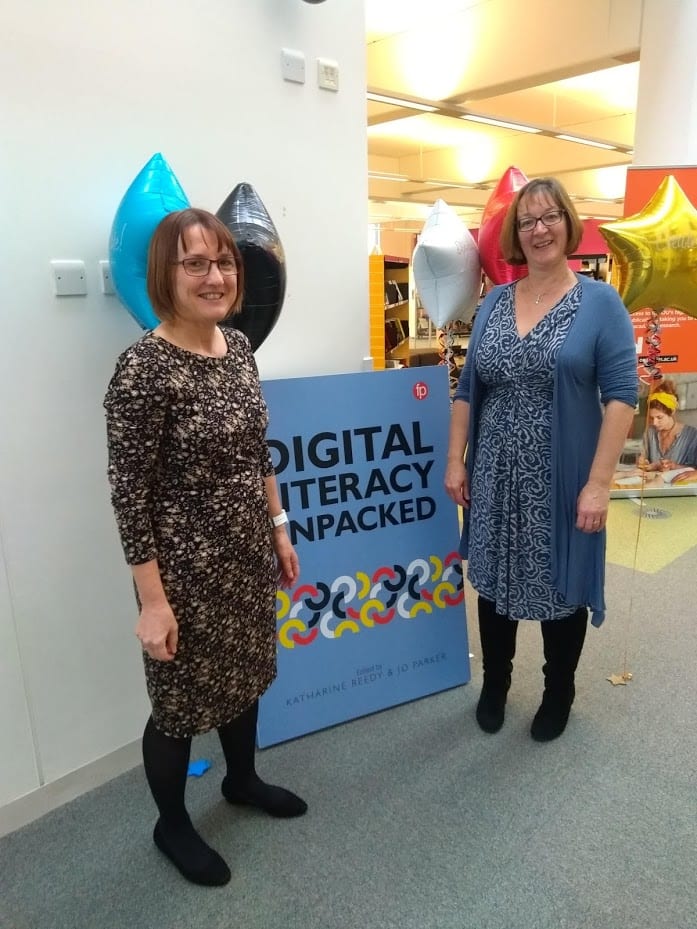
Katharine and Jo at the book launch for Digital Literacy Unpacked

I’m hosting a webinar on Thursday 3rd December from 11am-12pm with Katharine Reedy and Hossam Kassem from the Open University. They will be talking about embedding digital literacy in the curriculum. The webinar is open to all and going to be run in MS Teams.

If you would like to join then do drop me a line, so I have an idea of numbers as it’s open to those not taking the module as well. I will send you the link to the meeting.

The Open University has a strong, and lengthy, track record, both in developing digital and information literacy products and services, and embedding the skills into the curriculum. We have been using learning design approaches to embed the skills, working in partnership with others across the university, including curriculum teams, Librarians and Learning Designers. During 2020 we have continued to evolve our approach and share it with colleagues in the wider sector to support the move to online learning.

Join Katharine  (editor along with Jo Parker of Digital Literacy Unpacked, from Facet publishing) and Hossam (a member of the Library Live Engagement team and Accessibility Lead) to hear about the OU experience.


Connection and presence in online teaching – a webinar by Dave White

Dave WhiteI’m delighted that Dave White from the University of the Arts London has agreed to present a webinar for the third year running as part of my module. The session will be taking place on Tuesday 24th November from 11am-12pm. Dave is always well worth listening to, whatever topic he is speaking about. However, the title of his webinar on Tuesday is really relevant at the moment given the shift to online learning and the concerns many of us have about student engagement. I think the idea of connection and presence when we teaching online is really important and I’m looking forward to this session very much. Dave tells me more about the session and says:

“Moving teaching online has emphasised our need for connection and co-presence. It appears these don’t come for ‘free’ in digital spaces and must be deliberately designed into our online pedagogy. In this session we will explore the notion of Connectivism to reflect on the digital spaces and teaching practices which cultivate a sense of presence and collective belonging online.”

As ever, the session is open to guests from outside City, and anyone not taking the module. Just get in touch via this form if you would like to join and I will send you the invite details.

Webinar 3: approaches to developing staff and students’ digital capabilities

Next week I have my third webinar, this time delivered by Sarah Knight and Lisa Gray who work for Jisc. As with other sessions please do let me know by registering if you would like to attend and you are not taking my module. The session is open to all. Sarah and Lisa tell us more about their session:

We are experiencing unprecedented times with the changes the pandemic has brought to every aspect of our lives and the experience for all our staff and students.  The fact that the skills needed to thrive in an increasingly digital world will continue to evolve with each new technological innovation presents challenges for universities.

The speed of change and the widescale adoption of new technologies by businesses, governments and daily living means that the future workforce not only needs to be digitally capable but digitally confident and resilient.

At Jisc we have been tackling these challenges since 2008 through our research to better understand and support the development of digital capability for students and staff – the skills needed to live, learn and work in a digital society (Jisc, 2014). Work has included: the development of our digital capabilities framework (Jisc, 2017) which has provided a shared vocabulary to describe digital capabilities; a series of profiles that breakdown of the capabilities relevant to particular educational roles; a ‘discovery tool’ a first step for staff and students to reflect on their digital skills which generates a personalised report suggesting next steps and developmental resources; organisational models; and curriculum resources.

This session will provide an overview of our research and how universities are developing the digital capabilities of their staff and students in the UK.