About Jane Secker

Associate Professor in Educational Development at City, University of London

Webinar 2: Open Educational Practices with Lorna Campbell and Catherine Cronin

Lorna Campbell. CC-BY-SA-4.0, Mike Peel, Wikimedia Commons
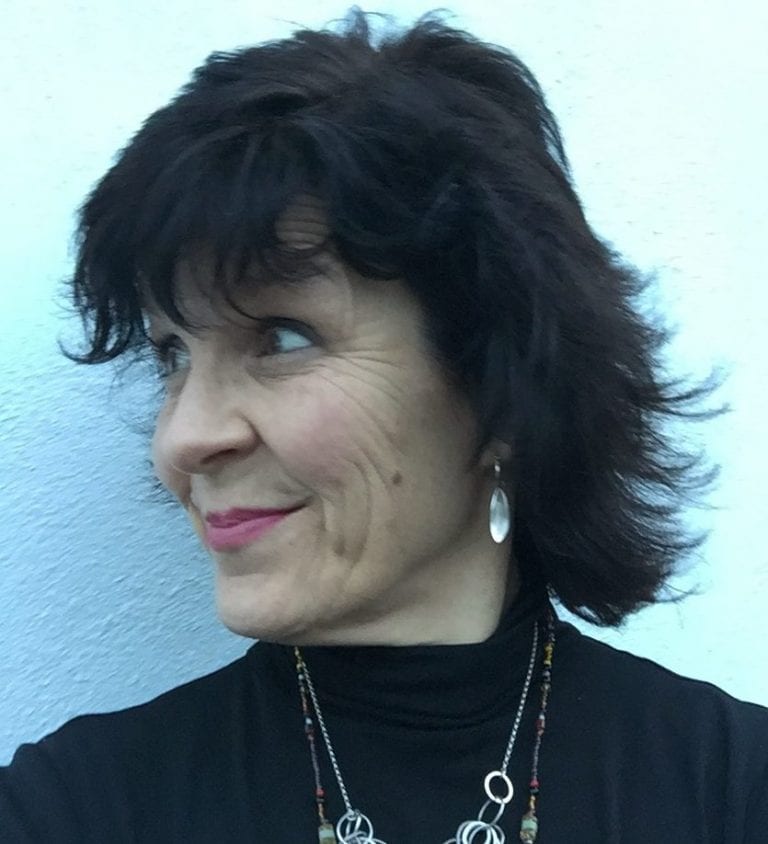
Catherine Cronin

Catherine Cronin

I’m delighted to announce my next webinar, on Tuesday 3rd November at 11am GMT. If you are not taking this module and wish to join the webinar then please register using this form. In this interactive session, Lorna Campbell and Catherine Cronin will explore interpretations of Open Education Practice and share recent examples arising in response to COVID-19. Various aspects of OEP will be explored, e.g., OEP to build community, OEP for teaching, OEP for authentic assessment, and OEP and policy. To conclude the session, Catherine and Lorna will invite participants to collaborate and explore potential applications of OEP in their own contexts.  

Lorna is a learning technology service manager at the University of Edinburgh’s Open Educational Resources Service. She has a longstanding commitment to supporting open knowledge and open education, and blogs about openness, knowledge equity and digital labour at Open World  http://lornamcampbell.org/ Lorna is also a Trustee of Wikimedia UK and the Association for Learning Technology, and an active member of the #femedtech network. You can find Lorna on twitter at @lornamcampbell. 
Meanwhile Catherine Cronin is Strategic Education Developer at the National Forum for the Enhancement of Teaching and Learning in Higher Education where her work focuses on digital and open education in the Irish HE sector. Other work includes writing and editing (e.g.,Open at the margins: Critical perspectives on open education) and collaborating on equity-focused open education projects including FemEdTech and Equity Unbound. You can find Catherine at @catherinecronin and http://catherinecronin.net/.

First Webinar on Digital Literacy, Copyright and Creativity

Chris at CC Summit by Sebastiaan ter Burg2

On Tuesday 27th October at 11am the first webinar for the module EDM122 Digital Literacies and Open Practice will take place. This session is being delivered by Chris Morrison who is the Copyright, Licensing and Policy Manager at the University of Kent. Chris and I run the website copyrightliteracy.org and he is the creator of Copyright the Card Game and co-creator of The Publishing Trap, our game of open access and scholarly communication. Together we also run a regular webinar series on Copyright in a Time of Crisis, hosted by the Association for Learning Technology. We also have a fun podcast series called Copyright Waffle. Oh and we have a collection of novelty copyright t-shirts. No doubt Chris will be wearing one next week!

The webinar topic is based on a chapter that Chris wrote in the book Digital Literacy Unpacked edited by Katharine Reedy and Jo Parker. Chris’s chapter is available on open access in the Kent Academic Repository.

If you are not formally enrolled on this module and wish to book a place on the webinar then please complete the form to book your place. A link will be sent to you ahead of the webinar, with the joining instructions.


Welcome to EDM122: Digital Literacies and Open Practice

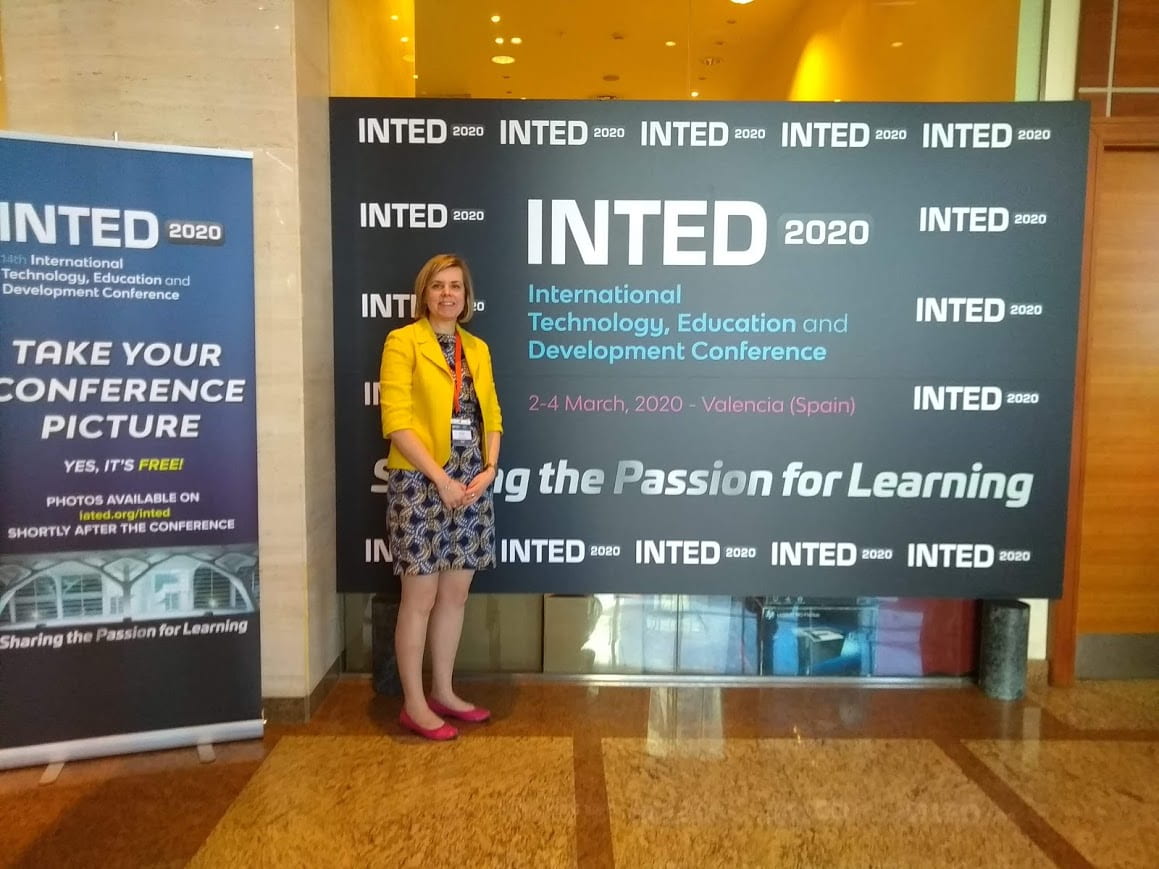
Jane at INTED in ValenciaI’m really delighted to be running this 15 credit module  as part of the Masters in Academic Practice for the third year running, so welcome to my new cohort at City University. For those who are not at City, but who would like a taste of the module you are very welcome to join the webinar series. I have also made information available about the teaching days and the reading list from the blog.

Digital Literacies and Open Practice is an opportunity for staff to explore two important and inter-related issues, that are central to the role that technology plays in education. It will be particularly interesting to discuss these issues in light of the COVID-19 crisis and the rapid shift to online learning. The importance of considering your own, but also your students’ digital literacies has been only too apparent with the start of the new academic year. Students’ entire learning experience is being mediated by technology and I have regularly had discussions with staff who made assumptions about what students might already know, about how to use technology and how to behave online. I think the need to embed digital literacies into the curriculum are now more important than ever before.

And the crisis has also highlighted the value of open practice, whether it’s about sharing teaching resources, helping students get access to digitised or electronic key readings, and the need for open access research. A month or so I signed the Open COVID pledge, to try and be open in the work I write and publish.  I’ve also been running regular webinars for the education community on copyright and online learning, with my research partner, Chris Morrison. So I am delighted, that the first webinar, coming up on 27th October will be delivered by Chris, who will talk more about copyright literacy.

I hope you can join some of this module and if you would like to understand a bit more about the rationale behind it and the feedback from the first cohorts, then I have recently published the paper I presented just a few weeks before lockdown at the INTED Conference in Valencia. It all seems like a dream now, international conferences and overseas travel, after spending the last six months in my home office. But I am looking forward to this module starting and to sharing my passion for digital literacies and open practice with anyone interested, wherever they might be in the world.

Module starting in October 2020

Photo by Leyre Labarga on Unsplash

I’ll be delighted to teach this module for the third time starting in October 2020. It feels like there is an even greater need, as we’ve seen the rapid shift to online learning at City but also around the world in education, to consider our own and our students digital literacies and also our approach to openness in our practice. At the heart of this module is a critical approach to our own teaching, learning and research practices and I hope that it’s a chance to challenge assumptions we make about what we know, what our learners know and can do and who has power and authority within academia as well as within our disciplines.

If you are interested in any of these questions then do consider signing up to this module or following online as I shift the course online, and plan to release the teaching materials openly and licensed under Creative Commons. As ever I hope to line up a series of expert guest speakers so there will also be an open webinar series and I am planning to ask each of my speakers to reflect on their topic in light of the pandemic. I hope you will join me, either informally or by enrolling on the module and I am excited to teach on subjects I feel so passionate about and which I think are at the heart of higher education today.

Webinar with Catherine Cronin on critical digital literacies, data literacies, and open practice

I’m delighted to announce that on Friday, January 10th, 2-3pm we have the final webinar as part of the module EDM122. The webinar will be given by Catherine Cronin, Strategic Education Developer at the National Forum for the Enhancement of Teaching & Learning in Higher Education in Ireland. Catherine delivered a very popular webinar last year for the module on a similar topic. 

Catherine tells us…..

As educators in an increasingly digital, networked culture, we are called upon to do a herculean range of things: manage our digital identities, assess a never-ending range of digital tools (and master at least some of them), understand copyright and open licensing,  publish openly, share openly, and not least, manage the continually evolving risks of all of these activities. And we support our students in doing the same. Open educational practices can provide powerful ways for us to improve educational access, enhance learning, and empower learners  — but openness is not a panacea. The heart of all approaches to open education and open practice should be to develop critical digital (and data) literacies and to foster agency on the part of all learners and educators regarding whether, how, and in what contexts they choose to be open.

Open Education, Open Questions. EDUCAUSE Review, 23 October, 2017.

You can follow her on Twitter: @catherinecronin and her website/blog: http://catherinecronin.net/

The webinar is open to all and available in Adobe Connect, with no password required and I look forward to seeing many of you on Friday.

Two webinars now available

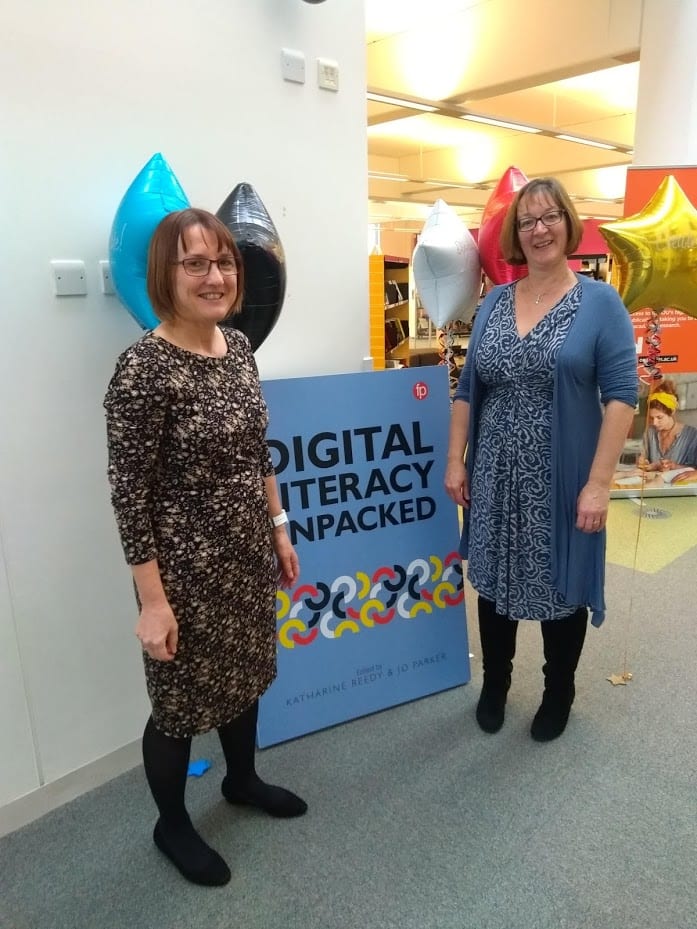
Katharine and Jo at the book launch for Digital Literacy Unpacked

We now have two more recorded webinars available from the module Digital Literacies and Open Practice. The first was a bonus webinar given a few weeks ago by Sam Aston and Chris Millson from the University of Manchester. Sam and Chris teach on the module ‘Open Knowledge in Higher Education‘ which inspired me to set up this course after I was a guest lecturer on it a few years ago running a session with Chris Morrison. Their webinar has a number of activities you can take part in to help you think about what open practice means and how to make small changes in your own teaching. A recording is available here.

The second webinar is from the editors of one of the set readings for this course, Jo Parker and Katharine Reedy who wrote Digital Literacies Unpacked. They talk about the approach to learning design at the Open University and how digital literacies, (but also employability and other skills) are embedded into the curriculum. A recording and the slides are available.

Embedding Digital Literacies in the Curriculum webinar on Friday!

Katharine and Jo at the book launch for Digital Literacy Unpacked

I’m hosting a webinar on Friday 6th December from 11am-12pm with Katharine Reedy and Jo Parker from the Open University. They will be talking about embedding digital literacy in the curriculum. The webinar is open to all and going to be run in Adobe Connect – no password required.

If you would like to join then do drop me a line, so I have an idea of numbers as it’s open to those not taking the module as well

The Open University has a strong, and lengthy, track record, both in developing digital and information literacy products and services, and embedding the skills into the curriculum. We have been using learning design approaches in our work both within the Library service to embed the skills but also in wider work across the university working with curriculum teams. Join Katharine and Jo (editors of Digital Literacy Unpacked, from Facet publishing) to hear about the OU experience.

Open webinar 21st November, 2-3pm with Dave White

Just a reminder we have another webinar tomorrow at 2-3pm with Dave White, who created the ‘visitor and resident’ typology. He’s going to be speaking about Networked values in hierarchical contexts. Last year’s webinar was a lot of fun and really interactive so please try and make the time to attend live – the session is open to all and as ever the session will be in Adobe connect.

If you would like to get a taste of what his webinar will be like, have a read of the blog post from last year. As ever I will be recording the session and making any slides available.

I hope you will join us.

Slides and recordings now available from two webinars!

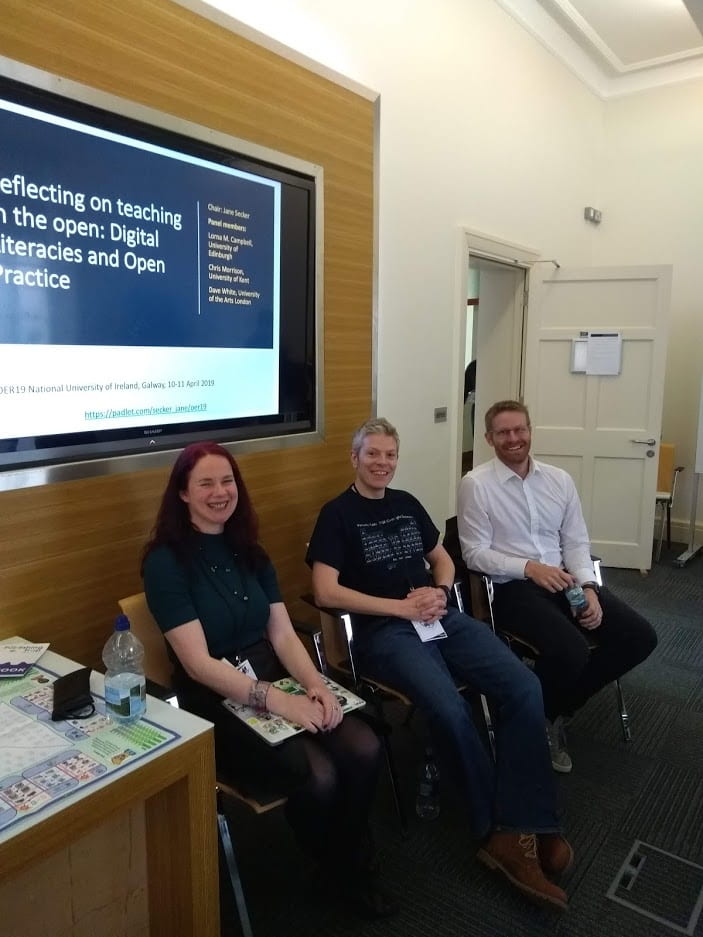
Lorna Campbell, Chris Morrison and Dave White presenting with me at OER19, Galway.

I’m really grateful to our first two webinar presenters, firstly Chris Morrison for giving our first webinar as part of the module last week on Copyright, Digital Literacy and Creativity. We also had a fascinating overview of the open education practices and policy at the University of Edinburgh from Lorna Campbell this morning. I’ve just made the slides and recordings available from both sessions. Here is Chris’s slides and recording and Lorna’s slides and recording.

There were quite a lot of really complimentary themes in the two webinars so they are well worth watching as a pair. Teaching people about copyright, licensing and Creative Commons is an important part of the open education approach adopted at the University of Edinburgh. Meanwhile, Chris is in a different role, but the University of Kent are in the process of creating a Copyright Literacy Strategy which will be used to guide both staff and students. Sometimes people need nudges towards particular behaviours and so this was an interesting theme in both presentations.

We had a fascinating conversation at the end of Lorna’s webinar about how effective the open education policy has been and what might indicate impact or success – their policy was created 5 years ago now. She talked about an increasing number of staff who are creating blogs, and also around a dozen examples of courses using Wikipedia editing as part of a summative assessment for students. Using Wikipedia is often not encouraged, particularly in schools and having a Wikipedian in resident has really started to shift attitudes at Edinburgh.

Chris was able to share some recent research he did into academic perceptions of copyright and also his masters research into how universities are interpreting the exception known as ‘illustration for instruction’ since the review of UK copyright law in 2014. Inevitably Brexit came up, as well as developments in Europe including the controversial Digital Single Market directive. Thank you to both my presenters, who also joined me earlier in the year at the OER19 conference (along with Dave White) to share their experiences of being part of this module.

Webinar 2: Lorna Campbell on open educational practices tomorrow at 11am

Lorna Campbell. CC-BY-SA-4.0, Mike Peel, Wikimedia Commons

I’m delighted to announce that the second webinar being run as part of the Digital Literacies and Open Practice module will be taking place on Tuesday 5th November from 11am-12pm GMT. It will be given by Lorna Campbell, from the University of Edinburgh and is entitled ‘Open for all? Engaging with open education practice at the personal and institutional level.‘ Once again it will be in Adobe Connect and is open to guests if you would like to join (no password). We will also be recording the session and I will share the slides and recording afterwards for those who can’t join us live.

I read Lorna’s blog post on the Soul of Liberty: openness, equality and co-creation last year. It is based on a conference keynote that she gave. I had already thought that open practice was important, but she explores a whole range of issues however the most important point of the post for me is the section that is entitled Inclusion, Exclusion and Structural Inequality. Openness is about things being free, and reducing costs, but it’s also about trying to address inequalities in education. Inequalities are all around us; who has power, who gets access to knowledge, who’s voice gets heard and it’s such a powerful part of the open movement, to try and redress that on many levels. I am really looking forward to tomorrow and I hope that some of you will join us! I was also delighted that Lorna joined me at the OER19 conference to share her experiences of being part of the Digital Literacies and Open Practice module.